Wednesday, September 27, 2006

Grandmothers


In 1956 when I was 11, I got to go with my Grandma Rachel on the Primary Train from LA to SLC. She was going to Primary Conference that spring because of her calling on the Stake Primary Board. We visited with Aunt Anne and Aunt Blanche. The priesthood leaders would go up to General Conference the following week or so.

My parents, Lloyd and Lucille, met in the Garvanza Ward in Los Angeles. Their families had both moved from Utah for the health of family members. The picture is from a History of the Garvanza Ward, and both of my grandmothers are shown. The Bishop's wife is the grandmother of Spencer Gunn of St. George.

A story: A member of our Stake Presidency in Van Nuys, James Craddock, remembered my Grandma Rachel. In conference he told us he probably wasn't the best behaved as a new child in Primary, and one day before church the Primary President asked his name. When he told her she said, "So you're Jimmie Craddock!" He thought it was wonderful. He was popular! Later he figured out why she reacted as she had.

In the snapshot from 1956, l-r, Great Aunt Anne, Great Grandmother Mary Chambers, Great Aunt Blanche, and Grandma Rachel.

Tuesday, September 26, 2006

Primary Open House


On September 27th we're going to the Primary Open House in SLC as a Ward Presidency. It's always a good feeling at Conference time. Our president is related to the Bowlers and Coxes of St. George.

Food Storage #2


I have two kinds of storage in our food room and in my mind--long term and short term. I keep things we use and rotate, canned goods and other commodities such as pineapple, tomato-based products, olives, green chiles, tuna, evaporated milk, peanut butter, as well as pasta, cake mixes, chocolate chips, etc. Paper goods, too.

I don't have a root cellar, but we like to put 25-50#'s of potatoes in our cold garage each winter. I also try to keep a big, whole winter squash or two. With their hard skin they can last into January or February,
at least. I view this as insurance, so if we don't use them I don't mind.

My second type of storage is long term and rotation is slower, if at all. These are the basics that we could live on. I use them now, but I store bigger quantities than we actually need at present. In this category I count rice and beans and oatmeal and sugars and flour and salt. I do store wheat. I store vegetable oils even though they turn rancid fast--I must rotate or discard. I like some canned meat and fish--a little corned beef and a lot of tuna. I keep cans of dried things because I think they'll make a good supplement--a handful of dry carrots and onions may spiff up all that rice. For vitamin C, I store some dry juice product; wheat sprouts make their own vitamin C. For fruit, raisins and other dried berries.

Water is important for both immediate and long term use. I keep a couple of three gallon water jugs with the little taps, so if my water is out I can put one at the kitchen sink and stay in business. We also have gallon and ten gallon containers of water for long term.

Love, Mom

Sunday, September 24, 2006

Food Storage #1


What should we store? Well, I like to ask myself, "How has Mankind survived up until now?"

Scots have eaten oatmeal every morning since time began. Latin Americans eat beans and rice daily--and tortillas in some places. Asians eat rice. Eskimos smoke salmon to last through the winter. Hopi Indians parch corn and peaches. Eary Americans kept a root cellar to store carrots, potatoes, turnips, for"fresh" veggies in midwinter. English sailors learned they needed vitamin C so brought limes along. A man who survived in Europe after WWII was asked what people most valued during that hungry time. "Oil," he said. "Vegetable oil." You could cook anything--flowers or grass if need be--in a little oil.

My chief experience living on stored food was in Alaska. In Hooper Bay we were expected to have ALL our food for the winter. The Eskimos did, too. (It was considered a shame to run out of food in the spring because you'd have to borrow from others.) Some of our fellow teachers brought just the basics. When the basics became boring, they envied our supplies of Mexican and Oriental foods, our BBQ sauce, etc. . The ones who brought only Sam Andy dehydrated stuff were tired of it in a week and simply couldn't eat it after two. We valued anything fresh. If we did get a head of tired lettuce, we didn't dare to waste any of it. Our neighbor had 50# of fresh onions, and we had 50# of fresh carrots so we shared. If we didn't make loaves of bread each Saturday morning, we had to manage without it during the week. Our only milk was dehydrated. All of us were surprised at the QUANTITY we used. It's more than you think when there's no chance to pick up a burger or call for a pizza--not so much as a candy bar to eat unless you already have it on your shelf.

In The Little House on the Prairie series, The Long Winter tells what it's like when a family had only wheat. Towards the end, the mother made sad little ground wheat bisquits that became so unappetizing the children would rather eat nothing.

Top picture, Hooper Bay girls in front of a pile of serrated, dried salmon. Bottom, in winter when we opened our back door, the snow had drifted up as high as Jake's shoulders; Sara and Rachel. Winter '71

Saturday, September 23, 2006

Grandpa Evans


My Grandfather Evans, always a gentleman, was an excellent mathmatician (an accountant), had beautiful penmanship, and always dressed just right. Unlike the people in my own busy household, he was unhurried and quiet. He would hold us in his arms and whisper kind things. "This is my smart girl." I don't know what he whispered to the others.

This picture was taken when Grandma and Grandpa Evans took the ship Lurline on a cruise to Hawaii in the 50's--a very big deal. Everyone went to see off their friends and visited on board before the ship embarked. In the picture GG and my Grandpa are strolling on the deck. (The other people are all strangers.)

Womens Conference

Over ten years ago when Rachel lived in SLC, we went to the Women's Conference at the Tabernacle, my four daughters and I. It made me happy and I think about it when the meeting comes around. Tonight I went to the USU Institute Broadcast with the USU 4th Stake. President Hinckley is fighting cancer.

Tuesday, September 19, 2006

Cleaning - Old and New


Bon Ami cleanser, around since I was young, works well where "soft scrubs" are needed at a third the cost. My mother liked us to use it on windows because it cleaned without scratching.


I guess everyone knows about these so-called erasers, a sponge-like product that cleans up a well-used fridge door handle, as well as crayon, etc. In grocery stores. Generics available, two sponges for $1


Monday, September 18, 2006

Happy 90th GG


We went to lunch for my mother's birthday, September 16th, at the Painted Pony in St. George. The hit of the event was the family book. The next day after church, friends from her ward stopped by to visit.

Sunday, September 17, 2006

Hats


My mother turned 90 yesterday. Willard and Rachel Evans are her parents. They owned a home in SLC and lost it in the Depression. About the same time, my mother had pnemonia and nearly died, so they moved to Los Angeles for her health. Grandpa refused to buy another house, so they rented until he died.


Monday, September 11, 2006

Ukiyo-e or Japanese Woodcuts


I finally uploaded the pictures. Here's a link or two. The second one is the best because you can go through several in the Fuji series.


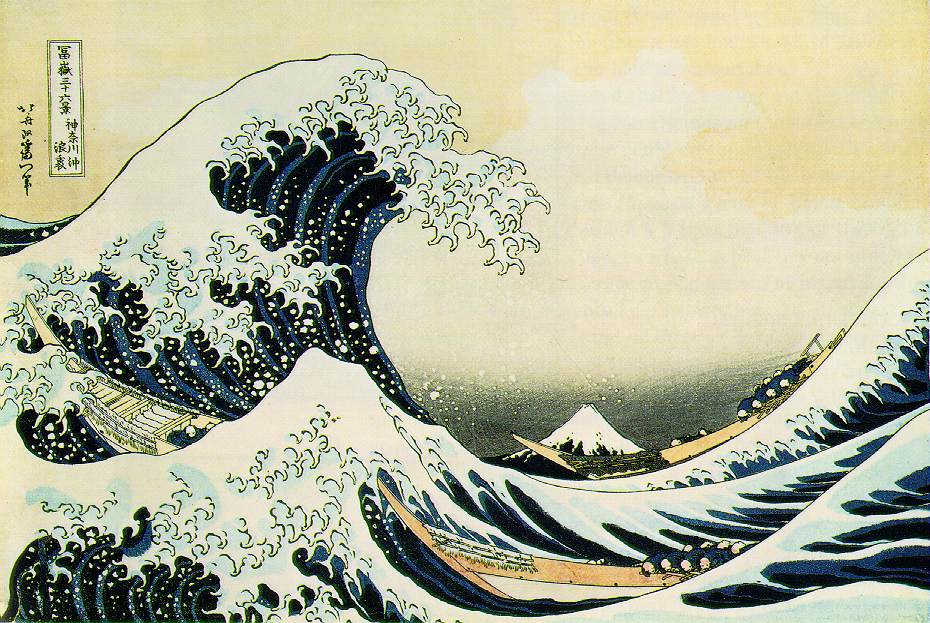
I'm hanging some pictures this week, so Japanese colored woodcuts (ukiyo-e) are on my mind. The two artists who got my attention in college are Hiroshige and Hokusai (1760-1849), but there are many others. The artist drew a picture and then an expert artisan carved the woodblocks and printed them.

The wave picture is a part of a series, Thirty-six Views of Mount Fuji. It was popular to do a series of pictures like “Sixteen Scenes from the Village,” etc.

I have pictures from a calendar my children gave me, and I like them as well as any so I’m hanging some up this week.

Another Flynn story: Jack Flynn, as a young man, knew these ukiyo-e artists and bought one of these prints at the time. It wasn’t an original, but the blocks have been reproduced to make prints that come close. That’s what his is in the photo.

Love, Mom


Sunday, September 10, 2006

NPR Car Talk


I have rarely listened to the radio through the years, but we love Car Talk, two brothers giving car care advice to callers. If you have a second for the link, you might like Segment 1with the “Creative Signage.” We get the show Saturday mornings at 10:00, but it’s an NPR offering so you should be able to find it locally.

Thursday, September 07, 2006

ReTIREment


There is a Santa Claus! At least, that's how Roger is feeling. When he came home today he hurried me outside so I could see the new arrivals: four Goodyear tires ("Goodyear Eagles" stamped on each) with chrome wheels, all ready to go on his 57 Chevy. Thanks to all who contributed to his "reTIREment" gift. No, his car doesn't look like this yet, but he's working on it even as I write.

Exercise

Until the last century, people had to work so hard or walk so much that a "workout" didn't make any sense. (In old English novels even the upper class are always out "taking a turn.") Actually, I find any kind of exercise--walking, running, a gym--hard. It's not the physical strain but the boredom.

I like Curves because they keep it short and sweet. You do each machine for 30 seconds, and between them you jog in place for 30 seconds. After making the rounds twice you're done. No one is yelling at you to "feel the burn." It helps that there are no boys allowed, and you don't have to compare yourself to hard-body types because Curves ladies, in all shapes and sizes, don't take themselves that seriously. And the price isn't bad. At $30 a month, you could go for a whole year and pay what cool girls pay for a couple of cool outfits at a cool gym.

Saturday, September 02, 2006

Dorothea Lang


Dorothea Lang was famous for her photos of the Depression, such as this photo of a Migrant Worker and others. She traveled worldwide. Evidentally she also photographed well-to-do families to help finance her other work. I understand she was friends with sister photographer, Imogene Cunningham, whose work we know . She photgraphed the elderly Shainwalds who lived at the top of the Mark Hopkins Hotel in SF.